


Bureaucracy on the Chopping Block
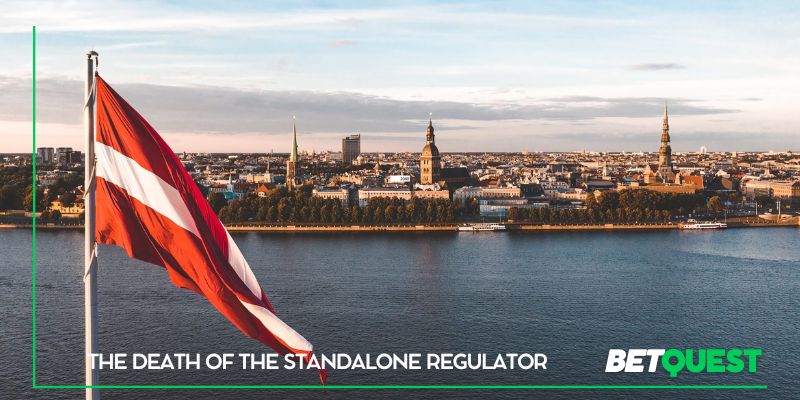
Governments rarely surrender an opportunity to construct a new regulatory quango, particularly when dealing with an industry as heavily scrutinised as gambling. Yet, Latvia has made the rare decision to actually dismantle one. The country has quietly folded the functions of its standalone gambling watchdog into its State Revenue Service, eliminating a layer of administrative bloat that officials finally admitted was a waste of both time and money.
This pragmatic consolidation is not happening in a vacuum. Across the Baltic region, a sweeping reform of gambling frameworks is currently underway. From radical corporate tax cuts in Estonia to the proposal of mandatory player tracking cards in Lithuania, the region is rapidly positioning itself as an agile, highly modernised testing ground for the European betting industry. For major operators, these structural shifts prove that regulatory oversight does not strictly require an ever-expanding web of red tape.
For UK readers weighing domestic offers against overseas regulatory shifts, Betquest tracks free-to-play jackpot competitions and compares sports sign-up offers in one place.
Dismantling the Standalone Watchdog
Until recently, the Latvian Inspectorate for Supervision of Gambling and Lotteries acted as the primary gatekeeper for the domestic sector, handling licensing and routine compliance. Meanwhile, taxation was governed separately. The Ministry of Finance eventually recognised the obvious: having two distinct government bodies exercising separate enforcement mechanisms over the exact same operators was incredibly inefficient.
The Inspectorate is now defunct as a standalone entity. Its responsibilities have been integrated directly into the State Revenue Service, which has established two distinct divisions to manage the workload. One division is entirely dedicated to licensing and compliance monitoring, while the second will handle remote and on-site technical and financial inspections.
The motivation here is purely operational. Online gambling is now the undisputed dominant vertical in Latvia, rendering much of the old, physical-first inspection framework obsolete. By centralising these regulatory functions, the Latvian government is deliberately minimising regulatory friction. Operators no longer have to satisfy two separate sets of bureaucrats demanding slightly different variations of the same compliance data. It is a streamlined approach that acknowledges the digital reality of the modern betting market.
Tracking Cards and the Privacy Paradox
If Latvia is focused on corporate efficiency, Lithuania is moving towards aggressive player tracking. The government in Vilnius has formally tabled a regulatory proposal for a “mandatory gambler’s card”. Set to act as a centralised monitoring system, Finance Minister Kristupas Vaitiekūnas claims the card will accurately assess how users are engaging with Lithuania’s gambling sector as the country builds towards a complete regulatory overhaul in 2028.
For UK bettors who have endured the chaotic rollout of frictionless affordability checks, the concept of a mandatory, state-mandated tracking card is a familiar nightmare. In theory, the Lithuanian government intends to use this data to safely transition to a more liberal, open market. If the state possesses a holistic, real-time overview of the entire landscape, it requires fewer blunt-force restrictions on operators.
However, the privacy reservations are monumental. Tying a user’s permanent identity and betting history to a centralised government database is a surveillance dream disguised as safer gambling policy. Whether the Lithuanian government can navigate the inevitable clashes with European data privacy norms remains to be seen, but the intent is clear: total visibility of the customer lifecycle.
Estonia’s Race to the Bottom
Completing the Baltic trio is Estonia, which is taking a vastly different approach to dominating the regional market. Rather than focusing purely on administrative reshuffling or player tracking, Estonia is taking a sledgehammer to its corporate tax rate. The country is targeting a headline 4% gambling tax rate by 2028.
To put that into perspective, this reduction would make Estonia’s tax rate 1% lower than that of Malta, the long-standing golden child of European iGaming hubs. Compare this to the UK’s Point of Consumption Tax (POCT) at 21%, and the strategy becomes glaringly obvious. Estonia wants to attract corporate headquarters, licensing revenue, and mass operational investment by offering the most aggressive tax incentives on the continent.
The Shifting Cost of Compliance
Why should the UK market pay attention to administrative reshuffling in Riga or tax debates in Tallinn? Because the Baltics are effectively a proxy battleground for some of the biggest corporate heavyweights in the global sector. Giants like Entain (through Enlabs), Fortuna Entertainment Group (TOPsport), and Olympic Entertainment Group (OlyBet) possess massive footprints in this region.
When Entain saves millions on compliance overheads because Latvia merged its regulators, or when it capitalises on a 4% tax rate in Estonia, those margins strengthen the global balance sheet. Furthermore, the Baltics highlight the severe inefficiencies of the UK model. The UK Gambling Commission operates in a perpetual, often disjointed parallel with HMRC, drowning operators in duplicated administrative tasks. The Baltic states are proving that a modern, digitised gambling market can be regulated effectively through unified revenue services, rather than bloated, independent quangos.
Betquest Verdict
Governments instinctively respond to gambling growth by building bigger bureaucracies, making Latvia’s decision to dismantle its standalone regulator a refreshing anomaly. While Lithuania flirts with the privacy minefield of mandatory tracking cards and Estonia plays a dangerous but lucrative game of tax undercutting, the entire Baltic region is demonstrating an administrative agility that the UK desperately lacks. Stripping away redundant paperwork does not weaken oversight; it simply cuts into the profit margins of compliance consultants while letting operators actually run their businesses.