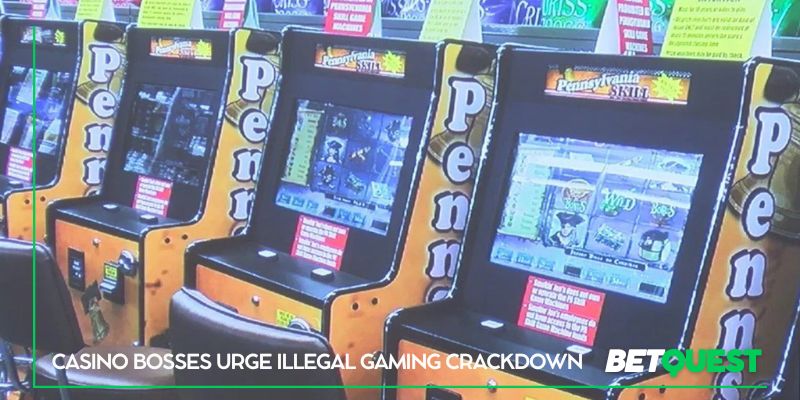


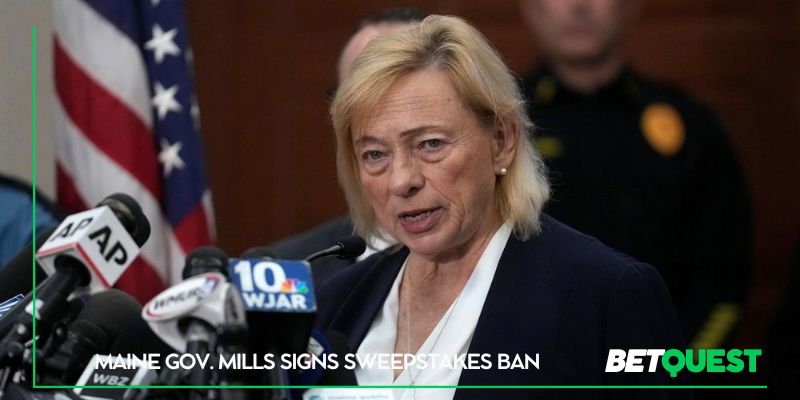
Maine has officially lost patience with the linguistic gymnastics of sweepstakes casinos. Governor Janet Mills has signed LD 2007 into law, making the state the second in 2026 to formally outlaw the controversial dual-currency model that has allowed pseudo-casinos to operate in regulatory grey areas. It is a decisive, heavy-handed move that strips away the facade of ‘promotional games’ and treats these platforms exactly like the unlicensed gambling operations they mimic.
The legislation, formally titled “An Act Regarding the Prohibition of Online Sweepstakes Games,” introduces punitive measures of up to $100,000 per violation. For an industry that has thrived on the technicality that players are purchasing 'gold coins' rather than depositing cash, the walls are rapidly closing in. With Maine joining Indiana in the 2026 legislative clampdown, the American sweepstakes gold rush is staring down an existential threat that regulated markets on this side of the Atlantic resolved years ago.
For players tracking safe, regulated options, compare sports sign-up offers and jackpot competitions on Betquest.
Dismantling the Dual-Currency Charade
Sweepstakes operators have long relied on a highly specific legal fiction to avoid running foul of state gambling laws. They claim players are not betting real money, but rather participating in free-to-play games using a virtual currency, with a secondary, redeemable currency thrown in as a "promotional" bonus. LD 2007 directly targets the mechanics of this workaround, effectively regulating the loophole out of existence.
The new Maine law leaves no room for interpretation. It explicitly defines an “online sweepstakes game” as any digital platform accessible via mobile or desktop that employs a dual-currency payment system while simulating casino-style games. The legislation covers the usual suspects—slots, poker, table games, bingo, and sports wagering simulations.
Crucially, the bill defines "direct consideration" as any token, coin, or representation of value purchased by a user or received via a bonus promotion, which is then used to participate in these games. By outlining the dual-currency model as one that inherently encourages users to buy digital products merely to obtain secondary tokens exchangeable for cash or prizes, Maine has successfully mapped and banned the exact business model underpinning the entire sweepstakes sector. Violations are now classified as civil offences. Any licensed gambling operator caught dabbling in or supporting these sweepstakes platforms will face mandatory licence revocation. The message is simple: you cannot have one foot in the regulated market and another in the grey zone.
A Shrinking Map for Grey Market Operators
The sweepstakes industry’s regulatory map is shrinking at an accelerated pace. Maine’s mid-July 2026 implementation date follows closely behind Indiana’s HB 1052, which takes effect on July 1 of the same year with virtually identical language and $100,000 penalties.
This is not an isolated legislative panic; it is a coordinated regulatory sweep. These two states are capitalising on the momentum generated in 2025, when heavyweights like California, New York, New Jersey, Nevada, Connecticut, and Montana all implemented strict measures targeting sweepstakes platforms. Add in Washington, Idaho, and Michigan—states that have aggressively fenced out sweepstakes operators for years—and the viable market for these platforms in the United States looks increasingly fractured. As further legislation advances through various state chambers this year, the domino effect is proving fatal to the sweepstakes expansion strategy.
Choking the Payment Pipeline
In a parallel move that highlights a broader tightening of gambling regulations, Governor Mills also signed legislation restricting the use of credit cards for sports betting and future iGaming markets in Maine. This brings Maine into alignment with states like Iowa, Massachusetts, and Tennessee, reflecting a nationwide push to sever the link between gambling and borrowed money.
The credit card ban is less of an operational shock and more of a formalisation of current industry trends. Major operators like DraftKings, FanDuel, and BetMGM have already begun moving away from credit card processing as a standard responsible gambling protocol. The optics of allowing punters to gamble on credit are universally poor, and state regulators are simply codifying what the smarter operators have already recognised: sustainable revenue cannot rely on player debt.
The Compliance Reckoning
From a UK perspective, the survival of the US sweepstakes model has always looked like an anomaly—a relic of fragmented, state-by-state legislative lethargy. In mature regulatory environments, operators offering slot simulations for financial gain outside the purview of a gambling commission are swiftly penalised. The United States is finally catching up to this reality.
The true impact of LD 2007, and the wave of similar bills, lies in its B2B consequences. By threatening to revoke the licences of any legitimate gambling operator caught interacting with sweepstakes platforms, states are forcing a wedge into the industry. Payment processors, game developers, and software providers can no longer afford to service both regulated sportsbooks and unregulated sweepstakes casinos. The compliance risk is too high.
This legislative creep forces operators to choose a side. The dual-currency workaround was highly profitable while it lasted, but regulatory bodies have simply learned how to read the fine print. As the cost of compliance rises and the penalties for evasion become ruinous, the grey market will face massive consolidation. Those who cannot transition to fully regulated, real-money gaming models will simply cease to exist.
Betquest Verdict
Maine’s LD 2007 is the final nail in the coffin for the argument that sweepstakes platforms are merely harmless promotional tools. By forensically defining and outlawing the dual-currency mechanism, Maine and Indiana have provided a legislative blueprint for the rest of the US to follow. The era of the unregulated pseudo-casino is drawing to a close. Operators relying on clever semantics rather than solid compliance frameworks are about to find themselves priced out of the market entirely. Adapt to the regulated reality, or prepare to shut down.